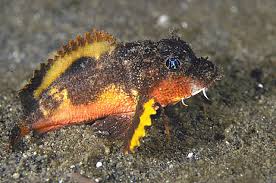
Bearded Scorpionfish (Minous trachycephalus)
The Bearded Scorpionfish (Minous trachycephalus), also known as the Bearded Stingfish, is a cryptic and venomous species found in tropical and subtropical Indo-Pacific waters. This bottom-dwelling fish is known for its excellent camouflage, venomous dorsal spines, and ambush-hunting strategy, making it a fascinating yet challenging species for experienced marine aquarists.
Key Information
• Small fish safe ❌ No (predatory towards small fish)
• Small invertebrate safe ❌ No (feeds on crustaceans and small benthic organisms)
• Coral safe ✅ Yes (does not harm corals but prefers sandy or rubble areas)
• Minimum tank size 250 litres (66 gallons)
• Adult size Up to 20 cm (7.9 inches)
• Diet Carnivorous, feeding on small fish and invertebrates
• Be aware of Venomous dorsal spines; handle with extreme caution
Appearance and Colouration
The Bearded Scorpionfish is a highly camouflaged species, often blending into sand, rubble, or rocky substrates.
• Body Colouration
Typically mottled brown, red, or beige, allowing it to blend into its surroundings.
• Head Features
Distinct barbels (whisker-like appendages) around the mouth, resembling a “beard,” which help in both camouflage and sensing prey.
• Fins
The pectoral fins are broad and fan-like, aiding in stability on the substrate.
Natural Habitat and Behaviour
In the wild, Minous trachycephalus inhabits sandy or muddy bottoms, often partially buried to ambush prey. It is commonly found at depths of 10 to 80 metres, preferring low-light environments.
• Ambush Predator
• Remains motionless, waiting for unsuspecting prey to pass by.
• Uses rapid mouth expansion to engulf prey instantly.
• Territorial and Solitary
• Typically found alone or in loose aggregations in deeper waters.
• Highly territorial, defending its hunting area from intruders.
Tank Requirements and Water Parameters
• Minimum Tank Size 250 litres (66 gallons)
• Water Parameters
• Temperature 22°C – 28°C (72°F – 82°F)
• pH 8.1 – 8.4
• Specific Gravity 1.020 – 1.025
• Aquascaping
• Provide a sandy or fine rubble substrate for natural burrowing.
• Include caves, overhangs, and shaded areas to mimic deep-water habitats.
• Lighting
• Low to moderate, as the species prefers dim environments.
• Water Movement
• Gentle to moderate, avoiding strong currents that may displace the fish.
Diet and Feeding
The Bearded Scorpionfish is a carnivorous ambush predator, requiring live or frozen meaty foods.
• Primary Diet
• Live mysis shrimp, amphipods, and small marine fish.
• Frozen silversides, squid, and krill once accustomed to captivity.
• Feeding Frequency
2–4 times per week, ensuring portions are appropriate for its size.
Feeding Tip:
• If reluctant to eat frozen food, use feeding tongs to mimic prey movement.
Compatibility and Social Structure
• Temperament
• Solitary and territorial, best kept alone or with larger, non-aggressive tank mates.
• Tank Mates
• Suitable with tangs, larger wrasses, and peaceful angelfish.
• Avoid small fish and shrimp, as they will be seen as prey.
• Do not house with aggressive predators that may stress or outcompete it.
Important Considerations
• Venomous Spines
• The dorsal spines contain venom, which can cause severe pain and swelling.
• If stung, immerse the affected area in hot water and seek medical attention.
• Reef Compatibility
• While safe for corals, it will prey on ornamental shrimp and small fish.
• Feeding Challenges
• May require live food initially, transitioning to frozen over time.
Summary
The Bearded Scorpionfish (Minous trachycephalus) is a venomous, cryptic ambush predator that thrives in dimly lit, sandy-bottom aquariums. Its nocturnal habits, territorial behaviour, and venomous spines make it best suited for experienced reef keepers. With careful handling and appropriate tank conditions, it can be a fascinating addition to a specialised marine setup.