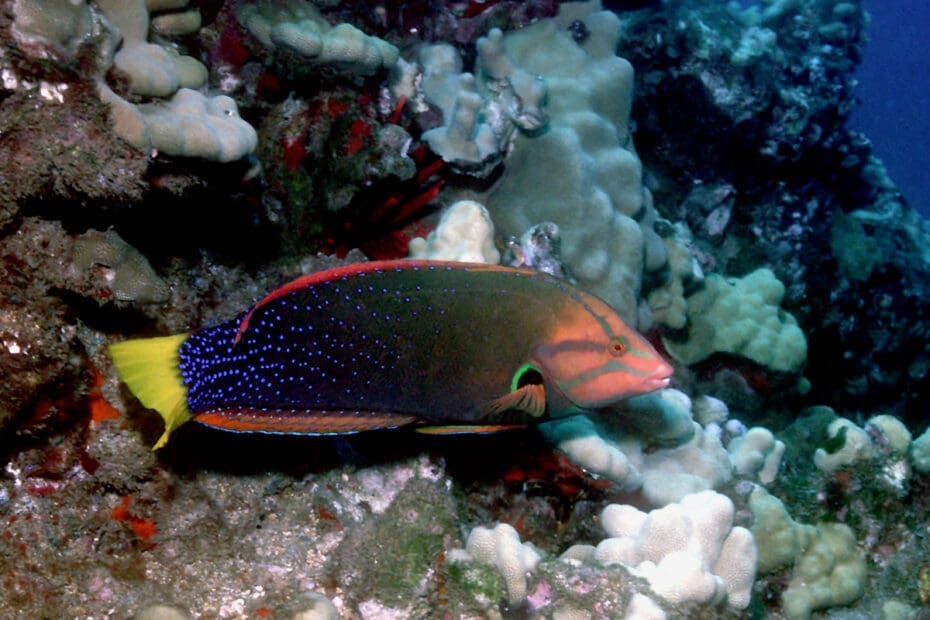
The Yellowtail Coris (Coris gaimard), also known as the Red Coris Wrasse or Clown Wrasse, is a vibrant marine fish admired for its striking coloration and dynamic behavior.
Key Information
• Small fish safe: ⚠️ With caution
• Small invert safe: ❌ No
• Coral safe: ✅ Yes
• Minimum tank size: 475 liters (125 gallons)
• Adult size: Up to 40 cm (16 inches)
• Diet: Carnivorous, feeding on mollusks, crustaceans, and other invertebrates.
• Be aware of: Requires a deep sandy substrate for burrowing; may prey on small fish and invertebrates; known to jump, so a secure lid is essential.
Appearance and Coloration
The Yellowtail Coris undergoes significant color changes from juvenile to adult stages:
• Juveniles: Bright orange-red with five white saddles outlined in black along the back.
• Adults: Pinkish head with green bands, small blue spots on a dark brown to blackish body, a pale greenish to yellow bar behind the pectoral fin, and a yellow tail.
These transformations make it a visually captivating species in marine aquariums.
Natural Habitat and Behavior
In the wild, Yellowtail Coris are found in tropical waters of the central Indian Ocean and the western Pacific Ocean, inhabiting coral reefs with a mix of sand patches, rubble, and coral at depths from 1 to 50 meters. They are solitary and often observed foraging for invertebrates among the substrate.
Tank Requirements and Water Parameters
To ensure the well-being of Yellowtail Coris in captivity:
• Minimum Tank Size: A 125-gallon (475 liters) aquarium is recommended to provide ample space.
• Water Parameters:
• Temperature: 24°C – 28°C (75°F – 82°F)
• pH: 8.1 – 8.4
• Specific Gravity: 1.020 – 1.025
• Substrate: A deep sandy bottom (at least 15 cm or 6 inches) is essential, as they burrow into the sand to sleep or when threatened.
• Aquascaping: Provide ample live rock to create hiding spots and foraging areas, mimicking their natural reef habitat.
• Lighting: Moderate to high lighting is suitable.
• Water Movement: Moderate flow to simulate their natural environment.
Maintaining stable water conditions and high water quality is crucial for their health. A mature, well-established aquarium will support their natural behaviors and provide necessary shelter.
Diet and Feeding
Yellowtail Coris are carnivorous and have a hearty appetite:
• Diet: Offer a varied diet consisting of:
• Vitamin-enriched frozen mysis shrimp
• Vitamin-enriched frozen brine shrimp
• Other meaty foods such as chopped seafood
• High-quality marine flake and pellet food
Feeding small amounts multiple times a day can help maintain their energy levels and vibrant coloration.
Compatibility and Social Structure
Yellowtail Coris can exhibit territorial behavior, especially as they mature:
• Social Structure: Best kept singly or in a male-female pair unless in a very large aquarium where multiple individuals can establish territories.
• Temperament: May act aggressively towards smaller fish and will prey on invertebrates such as shrimp and crabs.
• Compatible Tank Mates: Suitable companions include larger, robust fish such as tangs, angelfish, and triggerfish. Avoid housing with small fish or invertebrates.
Observing their interactions and providing ample space can help mitigate aggressive behaviors. Due to their territorial nature, they should be housed with non-aggressive tank mates to prevent stress.
Important Considerations
• Reef Compatibility: While they do not harm corals, their propensity to prey on invertebrates makes them unsuitable for typical reef aquariums.
• Acclimation: They may be shy upon introduction but typically become more confident over time.
• Health: Ensure a varied diet and stable water conditions to prevent common health issues.
• Jumping Behavior: Known to be jumpers, so a covered aquarium is essential to prevent escape.
With proper care and attention to their specific needs, Yellowtail Coris can be a vibrant and engaging addition to a marine aquarium.